
Coordinating team travel across London is rarely simple. Roads are congested, public transport introduces delays that are difficult to plan around, and multiple taxi bookings for a single group journey add up quickly.
Businesses across London and Essex are increasingly turning to self-drive group vehicle hire as their preferred solution for team transport. The reasons are practical, financial, and operational.
Here is why it makes sense.
The Cost Case Is Hard to Ignore
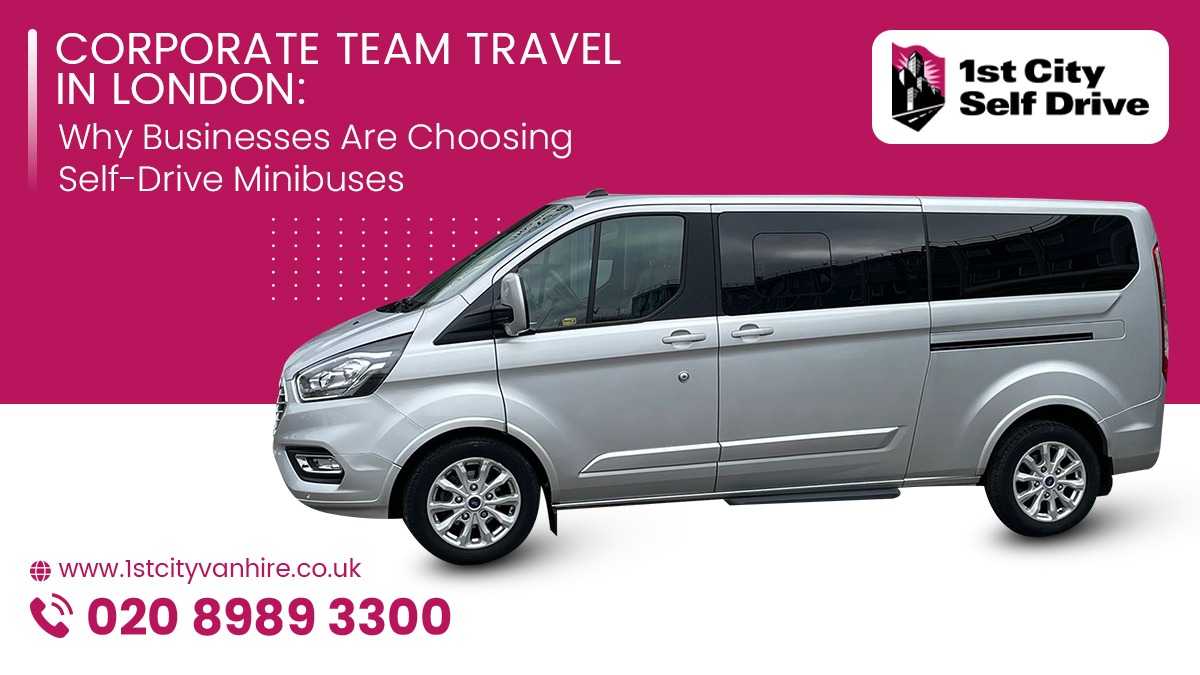
Eight people travelling by taxi means two or three vehicles, separate fares, surge pricing, and the inevitable wait while everyone assembles. A single nine-seater minibus rental for corporate groups removes all of that — one booking, one cost, no surprises. When you lay out the numbers properly, self-drive minibus hire in London rarely works out as the more expensive option. For finance teams managing travel budgets, that predictability matters.
For businesses that need regular transport, many local hire companies offer account facilities and discounted rates for long-term or repeat arrangements. This turns group transport from an ad hoc expense into a planned, manageable line in the budget.
Keeping the Team Together Has Real Value
There are practical and cultural arguments for travelling as a group.
On the practical side, when a team arrives together, they arrive on time. There are no delayed colleagues, no one stuck on the wrong platform, and no staggered arrivals that push a meeting start back by twenty minutes. For client-facing events, off-site training days, or conference attendance, that reliability directly impacts how the business presents itself.
On the cultural side, shared travel time is underrated. The conversation that happens between the office and the venue, or on the return journey after a long day, is often where teams decompress, debrief, and connect. Time spent travelling together as a team is rarely wasted. Travelling together gives a team time to talk, prepare, and arrive in the right frame of mind. A tube carriage does not offer that.
Flexibility That Public Transport Cannot Match
London’s public transport network is extensive, but it runs on fixed routes and fixed schedules. Corporate travel rarely fits neatly into either of these.
Self-drive passenger vehicle rental gives businesses complete control over departure times, pick-up points, and routes. If the meeting runs over, the vehicle waits. If the team needs to make a stop on the way, that is entirely within the driver’s control. For multi-stop itineraries, site visits, or events that involve more than one location in a day, this flexibility is not a luxury. It is a necessity.
Businesses operating across London and Essex also benefit from hire companies with multiple branches. A vehicle collected from a Leyton branch for a morning start in East London, for example, removes the need for the team to travel into a central location before the day even begins. Companies that also offer transit van hire in London alongside minibus options give businesses even greater flexibility when load size or passenger numbers vary between trips.
The ULEZ and Congestion Charge Are Worth Planning For
Any business planning a group trip into central London should factor in the Ultra Low Emission Zone and Congestion Charge at the point of booking, not after the journey.
Modern fleets from established commercial vehicle hire companies in London generally meet current emission standards, which addresses the ULEZ concern. The Congestion Charge operates during defined hours in the central zone and applies to most vehicles, including minibuses. Booking through a company that is transparent about these charges and whose vehicles meet current standards means no unwelcome surprises on the expense report.
What to Look For When Booking Corporate Group Hire
Not all hire arrangements are equal, and for business use there are a few things worth confirming before committing.
Insurance cover and breakdown assistance should be included as standard. Unlimited mileage matters for longer journeys or multi-stop days. A business account keeps repeat bookings simple and expenses easy to reconcile. A local minibus hire company in London — one with actual premises — provides a contact to call if plans change at short notice, rather than just a contact form.
For businesses that require vehicles on an ongoing basis, a flexible lease arrangement can offer better value than repeated short-term hires while still allowing them to scale up or change vehicle types as requirements change. The real savings in self-drive minibus hire in London come from one decision: matching the hire arrangement to the actual pattern of use. That applies whether the requirement is a single event or an ongoing fleet solution.
FAQs
1. Is self-drive minibus hire cost-effective for business use in London?
– Yes. A single nine-seater hire is typically far more cost-effective than multiple taxis for groups of six or more, and many hire companies offer account facilities and discounted rates for regular business customers.
2. Do business drivers need a special licence to drive a nine-seater in London?
– In most cases, a standard Category B driving licence is sufficient for private group hire. If the vehicle is being used for hire or reward, additional licence categories may apply. Always confirm with your provider.
3. Are hire vehicles used for corporate travel ULEZ compliant?
– Reputable hire companies maintain modern fleets that meet current ULEZ standards. Always confirm compliance with your provider before booking, particularly for journeys into inner London zones.
4. Can a business set up a regular account with a local hire company?
– Most local hire companies offer business accounts. It keeps billing simple, reduces admin, and makes repeat bookings straightforward. It’s worth asking about if your team travels regularly.
5. What is the difference between a short-term hire and a flexible lease for businesses?
– Short-term hire suits occasional travel. A flexible lease works better when transport is a consistent need — the rates are lower, and the arrangement can change as the business does.